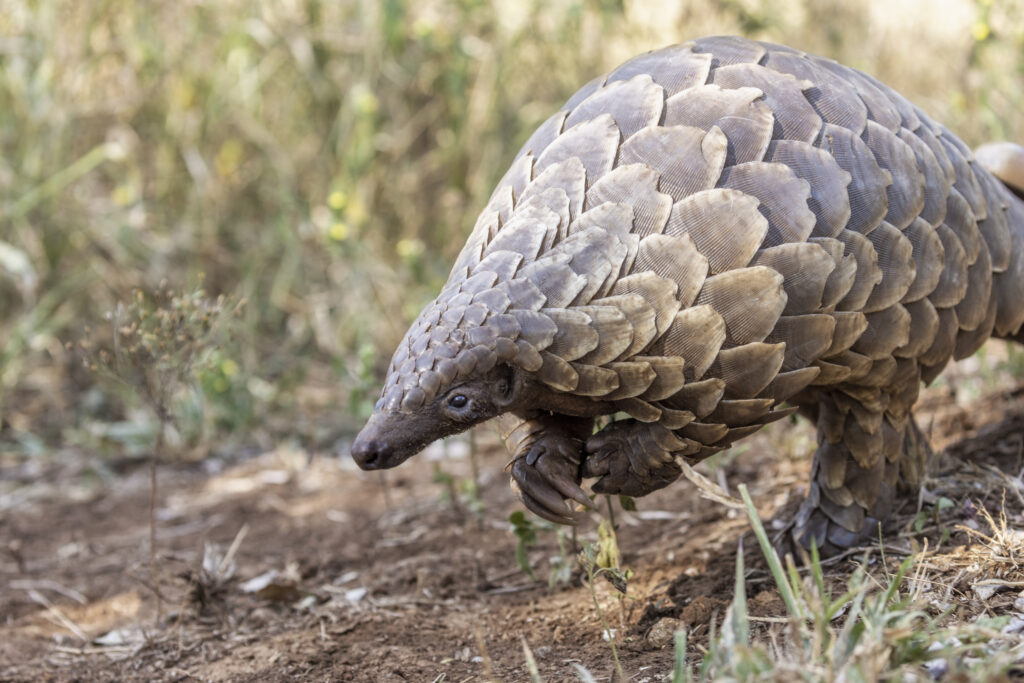
Celebrating pangolins gives us an important opportunity to reflect on the progress, challenges, and inspiring moments in pangolin conservation. For us, this year’s reflections come with exciting updates from the ongoing reintroduction project jointly supported by Zululand Conservation Trust and Manyoni Private Game Reserve.
Together, this partnership continues to play a vital role in giving rescued pangolins a second chance in the wild.
A Growing Population — and Close Neighbours
One of the most fascinating things we continue to observe is how these elusive animals establish their territories. Clear monitoring data shows that pangolins often choose to live surprisingly close to one another.
For example, Stevie, one of our resident males, occupies a large territory that overlaps with those of three different females. This territorial pattern highlights both the suitability of the habitat and the growing stability of the population — an encouraging sign that reintroduced pangolins are settling successfully.

An Unexpected Sighting
Recently, we received an exciting call from a neighbouring farm: one of their staff members had spotted a pangolin.
The monitoring team responded quickly and headed out with Ruby, our tracking dog, to try to locate the animal and potentially fit it with a tracking device. Using photographs and our identification toolkit, we determined that this pangolin was not one of the individuals released through the Manyoni project.
Instead, it appears to have originated from the nearby Phinda Private Game Reserve pangolin reintroduction programme.
Although we were unable to relocate the animal during the search, the sighting is incredibly encouraging.
This movement between reserves is exactly what conservationists hope to see. It suggests that pangolins are not only surviving but also dispersing naturally across the landscape — a critical step toward establishing sustainable, connected populations.
It also opens the door to future collaboration, as we aim to support neighbouring reserves in identifying and protecting emerging pangolin populations.
Project Milestones
Since the project began in December 2019, the results have been remarkable:
- 16 successful reintroductions
- 8 births recorded in the wild
- Continued territorial expansion across the region
These achievements would not be possible without the combined efforts of field teams, reserve partners, donors, and the ongoing funding support from the Zululand Conservation Trust.
Looking Ahead
Celebrating pangolins reminds us that conservation success is built over time, through persistence, partnerships, and careful monitoring.
As pangolins begin to move beyond reserve boundaries and establish new territories, we are witnessing the early stages of what could become a thriving regional population.
And that is something truly worth celebrating.